




Read this article in 中文 Français Deutsch Italiano Português Español
Heidelberg recycling site expands capabilities

15 October 2026
Heidelberg Materials UK has expanded the capabilities of its Agecroft recycling operation in Swinton, Manchester, through investment in a new wash plant and rail link.
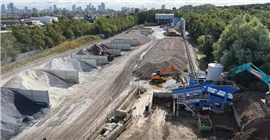 Agecroft recycling in Greater Manchester (Image: Heidelberg Materials UK)
The new investment is claimed to be the UK’s largest wash plant. It the second the company has installed following one of the same type at Bristol-based B&A Group’s site last year.
The 13-acre Agecroft recycling facility manages off-site disposal of hazardous, non-hazardous and inert soils, concrete and hardcore.
It provides recycling of construction, demolition and excavation (CD&E) waste at scale and can supply customers with a range of high-quality primary and recycled aggregates for use in construction projects, said Heidelberg Materials.
Formerly known as A1 Services, it was acquired by Hanson UK in 2022, before the business adopted the Heidelberg Materials name in January 2024.
The new wash plant separates, washes and processes up to 450,000 tonnes of excavated waste (primarily soils) a year from construction, demolition and industrial sites.
It is fitted with a drainage and water recovery system to capture and recirculate almost 100% of the water used to minimise its impact on the environment.
In addition, Heidelberg Materials has built a rail siding at the site, which receives deliveries of primary aggregate from the company’s Horton quarry in the Yorkshire Dales National Park.
Strict protocols are in place at the site to avoid any contamination of materials, the company said.
James Whitelaw, managing director aggregates, asphalt and recycling north, said, “The new bespoke wash plant enables on-site recovery and washing of material, turning soil and construction waste into recycled aggregates, helping meet increasing demand for more sustainable construction products, while diverting more material from landfill.
“In addition, the rail link allows the site to supply primary aggregates to the area, while reducing vehicle movements on the wider road network and cutting associated CO₂ emissions.”


CONNECT WITH THE TEAM